Is Healthcare in Thailand Expensive? Medical Realities You Should Know Before Relocating | FIRE in Thailand
When calculating costs for relocating overseas after achieving FIRE, one crucial element often overlooked is healthcare expenses.
Japan’s medical insurance system is exceptionally robust; as long as you pay your monthly premiums, you can receive a stable, high standard of medical service at any hospital for a fixed co-payment. However, this is not the case abroad.
In Southeast Asia particularly, the quality of medical service is generally proportional to the amount you pay. If you seek world-class treatment, you must be prepared for high medical costs.
For those who have only lived in Japan, the Japanese system is the "norm," making the reality of international healthcare difficult to imagine.
In this article, I will explain the medical situation in Southeast Asia, using my experience in Bangkok, Thailand, as an example. Please read this while comparing it to the medical services you currently receive in Japan to see how much of a gap exists.

Is Thailand’s Medical Standard High or Low? A Global Comparison
Thailand's medical standards are considered top-class within Southeast Asia and boast high levels even by global standards.
According to the Ministry of Foreign Affairs of Japan, Thailand's medical level is high, with multiple medical institutions in major cities meeting international standards. In terms of equipment and technology, they are equal to or even surpass those in Japan.
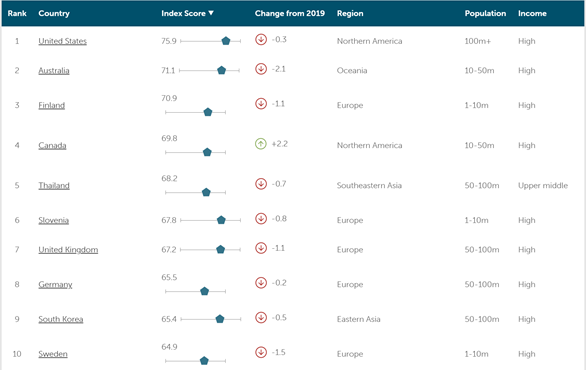
The ranking compared to the rest of the world is as follows:
参照元:Global Health Security Index
According to the Global Health Security Index (※1), Thailand is ranked 5th in the world, demonstrating its high level of medical technology and an environment where patients can receive treatment with peace of mind.
However, hospitals that provide high-level medical services are concentrated in major cities, including Bangkok, and in some regional cities, there are many hospitals that are inferior to those in Japan, with poor sanitary conditions and a lack of highly skilled doctors.
*1: The Global Health Security Index is an index that measures the extent to which health security is ensured in a country (for example, whether a country has a strong and resilient public health system that can prevent, detect, and respond to threats such as infectious diseases).
About Medical Costs in Bangkok, Thailand
While Thailand boasts world-class medical care, these high-standard services are primarily concentrated in medical institutions in major cities like Bangkok.
Also, as mentioned at the beginning, the level of medical services you receive is generally proportional to the amount you pay, so if you want a high level of treatment, you will have to pay high medical fees.
So, how much does it actually cost to visit a hospital?
Here is a simple summary:
| Item | 価格 |
| First-time Consultation Fee | Approx. 3,000 – 4,500 JPY |
| Inpatient Room (Including meals, per day) | Shared: 43,000 JPY~ / Private: 65,000 – 330,000 JPY |
| Treatment for Bone Fracture | Approx. 30,000 JPY~ |
| Ambulance Service | Approx. 7,000 – 20,000 JPY |
Source 1: Kakaku.com – Medical Expenses in Thailand (Bangkok)
Source 2: Bumrungrad International Hospital
Looking at the prices alone, there isn't a massive difference compared to the total costs in Japan. However, in Japan, insurance covers most of it, reducing your out-of-pocket expense to 30%. In Thailand, you are responsible for 100% of the cost. Consequently, even a minor injury or illness can result in a significant bill.
Furthermore, service fees in Bangkok vary depending on the doctor. Highly skilled and popular specialists often set high service fees, making the total bill much higher than at a general hospital.
In my personal experience, the total cost for treating a single cavity was nearly 400,000 JPY. When I contracted COVID-19, a single consultation, PCR test, and medication cost nearly 25,000 JPY.
I also know someone who was billed nearly 1 million JPY for a few days of hospitalization due to a fracture.
Consider International Travel Insurance Before Moving
While I am focusing on Thailand here, these high costs are not unique to this country.
In almost any country, paying 100% out-of-pocket will result in similar figures.
Does this mean you just have to accept these high costs when you need a hospital after moving?
The answer is no.
By enrolling in international travel insurance before you leave or joining a local medical insurance plan after arrival, you can access high-level medical services without paying exorbitant out-of-pocket fees.
1. Enrolling in International Travel Insurance Before Relocating
海外旅行保険と聞くと、海外旅行に行く時などの短期間カバーできる保険をイメージする方が多いだろう。しかし、大手保険会社の多くは海外に長期滞在する日本人向けに1年単位のプランを用意している。
タイに住む駐在員はこのような海外旅行保険に加入し、現地の私立病院をキャッシュレスで利用しているケースが多い。
駐在員や留学生向けに準備されている保険プランの為、盗難補償や緊急一時帰国の補償などが付いているプランもある。
年間の保険料は会社やプランにより補償内容や補償額が異なるが、概ね30万円~40万円のレンジが一般的だ。
2. Enrolling in Local Medical Insurance After Relocating
3. Utilizing Japan’s National Health Insurance (Overseas Medical Expense Reimbursement)
Some Thai companies cover these costs as a benefit for employees; in my case, my company covers my local medical insurance.
While the coverage might be thinner than international travel insurance, the annual premiums are slightly more reasonable, ranging from 200,000 to 350,000 JPY.
Individuals can join for similar amounts, making this a viable option to consider after moving.
3. Utilizing Japan’s National Health Insurance (Overseas Medical Expense Reimbursement)
If you continue to pay premiums to your local municipality in Japan after moving, you can apply for a reimbursement of 70% of your medical expenses upon returning to Japan.
Reimbursement is limited to treatments covered by Japanese insurance, so some items may be ineligible. While preparing the paperwork can be tedious, the benefits include not having to pay high private insurance premiums and the ability to visit hospitals easily when visiting Japan.
Summary
We have taken a detailed look at the medical situation in Bangkok, Thailand. Since the medical standards are not low, you don't need to worry excessively about major illnesses or injuries.
However, there are significant gaps in medical levels depending on the hospital, and you won't find the same universal 30% co-payment system as in Japan.
Preparation is key. I haven't had a major illness since moving to Thailand, but I do visit the hospital a few times a year for things like the common cold.
The reason I can use hospitals with Japanese language support without hesitation is that I am covered by insurance.
As the saying goes, "Prevention is better than cure." When planning your FIRE relocation, I highly recommend researching the coverage and costs of both international and local medical insurance.
Author: Yuki Ishida
Writer based in Thailand
In 2017, I fulfilled my long-cherished desire to move to Thailand and have been working as a sales and career consultant at a Japanese staffing company there.
I began my activities as a writer in 2019 and mainly share information useful for living in Thailand and moving abroad through both domestic and international media. Based on my own experience of relocating overseas, I strive to provide realistic information to help those planning to move abroad avoid regrets, and I write with this motto every day.
The media I have contributed to so far are not limited to Thailand-related topics, but also cover a wide range including domestic and international travel, local governments, food manufacturers, and educational institutions.