"The Salon of Talent (Juzaburo) Vanishes, Only Capital (Mitsui) Remains" —Reflections on Tsutaya Juzaburo's "Koshodo Ruins" and "Nihonbashi Mitsukoshi"
The Identity of a "Disappointing Landmark"
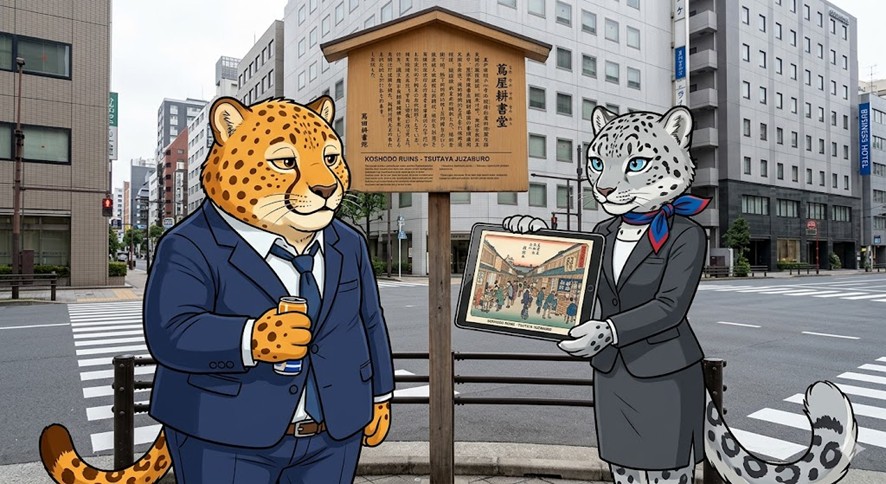
A 5-minute walk from the nearest station, Kodenmacho. I visited the site of "Koshodo," the publishing house of Tsutaya Juzaburo, the extraordinary producer of the mid-Edo period.
The base of the media king who discovered Katsushika Hokusai and Kitagawa Utamaro, leading Edo’s pop culture. Expecting a grand historical site, what jumped into my eyes was just a single sign standing lonely on a quiet sidewalk.
The bustle of the past is gone. Across the street stands a common business hotel. Its "disappointment" rivaling Kochi's Harimaya Bridge or Singapore's Merlion made me stand there in disbelief.
The Light of "Talent" Left by the Media King of Edo
Tsutaya Juzaburo is the man who revolutionized the Edo publishing world, fresh in memory as the protagonist of the 2025 Taiga drama "Berabou." He achieved success with Yoshiwara guidebooks and planned and published entertainment novels and Ukiyoe prints that the common people of the time were wild about.
Sharebon depicted chic conversations in the pleasure quarters, and Kibyoshi were media where top-tier artists drew over texts written by intellectual samurai of the time, serving as the roots of modern manga. Juzaburo was not just a publisher, but the leader of a creator group that planned talent and created an era.
However, only a single sign remains here now. Is it because what he invested in was personal, intangible assets—the too-beautiful thing called "talent"?
Walking Nihonbashi: The Breath of "Established Shops" Continuing Across Space-Time
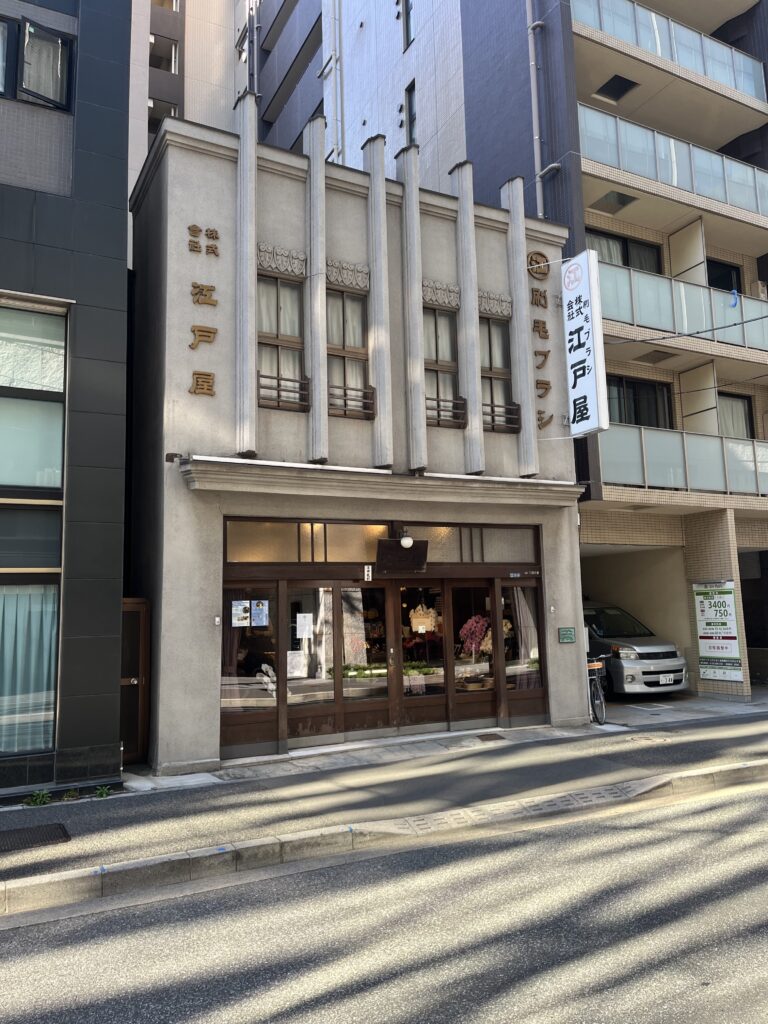
Leaving the Koshodo ruins, I made my way toward the heart of Nihonbashi. During the move, the sign for "Edoya" caught my eye.
Founded in the 3rd year of Kyoho (1718). A specialty shop for brushes that has continued since more than 30 years before Tsutaya Juzaburo was born. Seeing an established shop continuing business in the same place since the Edo period among modern redevelopment buildings, I felt deep emotion wondering if Juzaburo saw this too.
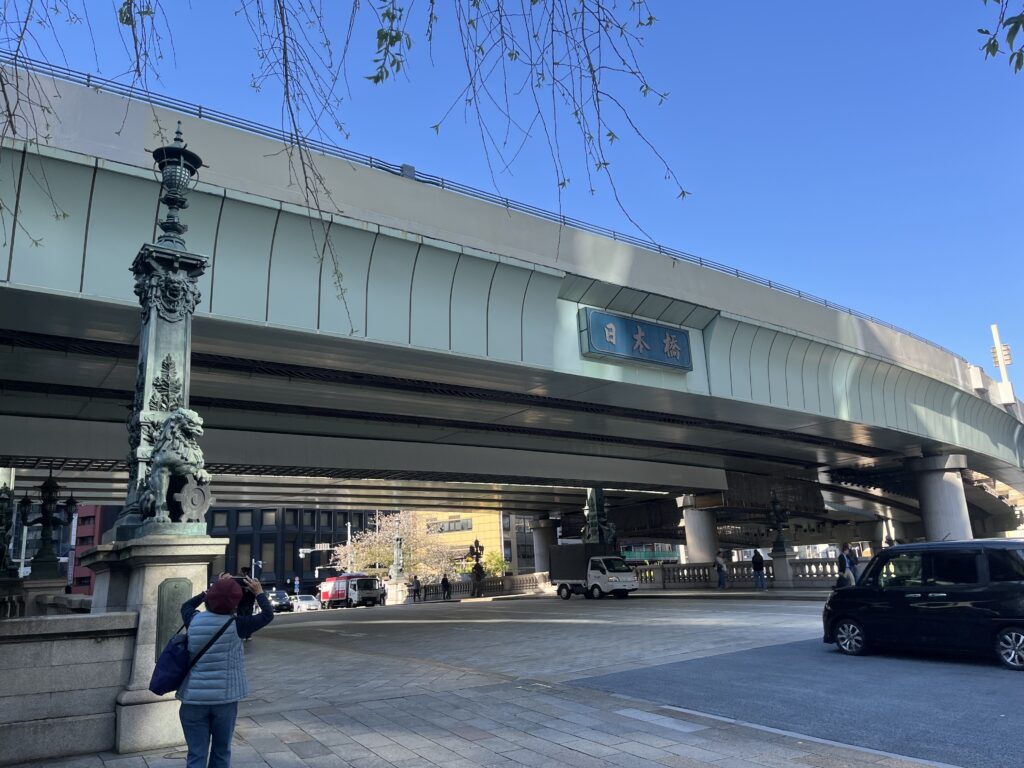
Passing the "Japan Highway Zero Point" embedded in the center of Nihonbashi, I am reminded once again that this city is not just a place for preserving history, but the "starting point of Japan" that continues to be constantly updated.
The Fortress of Overwhelming "Capital": The Shock of Nihonbashi Mitsukoshi
And when I stood in front of the Nihonbashi Mitsukoshi Main Store, I realized the true nature of the emptiness I felt at "Koshodo."
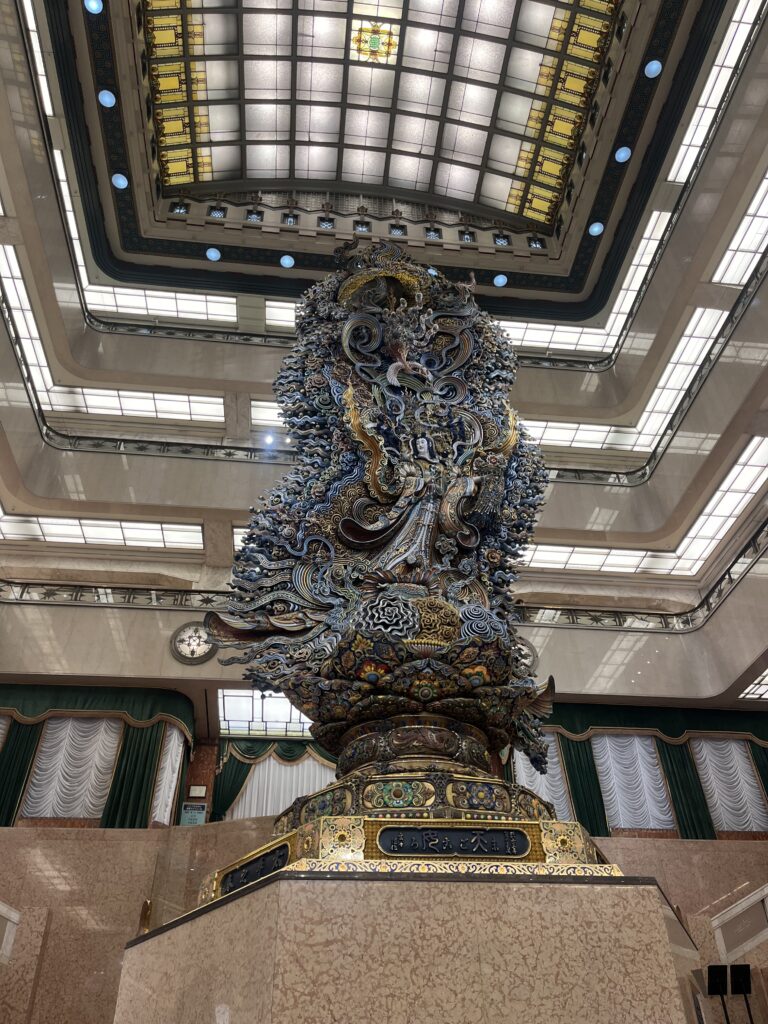
The giant "Tennyo (Magokoro) Statue" soaring in the 1st-floor atrium. The overwhelming use of space reaching up to the 5th floor embodies the "leisure only an established shop possesses," which is rarely seen in modern architecture that emphasizes efficiency.
Since Mitsui Takatoshi founded Echigoya Drapery in 1673, Mitsukoshi has reigned as a symbol of "the tangible" for over 350 years. Along the street, Mitsui Sumitomo Trust Bank, a symbol of financial capital, also stands.
Juzaburo's "Salon where talent gathers," which became a single sign, and Mitsui's "Capital," which remains as heavy stone architecture. I was moved by this stark contrast in the modern era.
Summary: Do You Aim to Create "Intangible Assets," or Build "Capital (Tangible Assets)"?
Looking only at the surface, it can be said that "The Salon of Talent (Juzaburo) created by Tsutaya Juzaburo remains only as a sign in modern Japan, while Capital (Mitsui) continues to expand its assets even today."
Certainly, the investment in the "Salon of Talent" that colored Tsutaya Juzaburo's era did not remain in a visible form today.
However, Tsutaya Juzaburo left masterpieces to the world that are still read today, such as the Kibyoshi culture represented by Koikawa Harumachi and Santo Kyoden, Ukiyoe by Utamaro and Hokusai, and Tokaidochu Hizakurige.
The "Salon of Talent" called Koshodo has vanished. However, Ukiyoe has been accepted not only in Japan but also globally for over 150 years. In the late 19th century, Monet and Gogh encountered free and original Ukiyoe and were captivated by the innovative style not found in Western academism. The result was the birth of the innovative "Impressionism." Many works remain that are thought to have referenced the composition of Japanese Ukiyoe.
On the other hand, the investment in "Capital" built by the Mitsui Zaibatsu continues to bring value even to a future 300 years from now. Nihonbashi is now evolving again into a "Water City" open to the sky and river through the grand redevelopment project "Nihonbashi Riverwalk." This city, which has been the center of Japan since the Edo period, seems to have no intention of yielding that seat.
Will you depend on the immediate "liability" of energy drinks like the salaryman "Chita" in a tight suit (remaining an employee)? Or will you burn your "intelligence" and leave behind intangible assets in the name of talent (the world of living by talent)? Or will you step into the world of "assets" on the other side of the mirror (the world of the asset owner)?
Beneath the ground of Nihonbashi, the heat of "talent" and the cold intelligence of "capital" still sleep today.
■Author Profile
About the Author Kenji Kamioka
AFP (Certified by the Japan Association for Financial Planners), Licensed Real Estate Transaction Specialist
President and CEO of Julius Co., Ltd.An investor and media owner with over 10 years of business management experience in three Asian countries: China, Thailand, and Vietnam. While actively managing real estate and financial assets through his own company, he promotes a lifestyle that leverages the structure of capitalism. He has authored numerous books.
▶ [Click here for author profile details.]
▶ [See the list of works here]