Is the "Land of Smiles" No Longer Cheap? The Reality of Capitalism Felt After My Recent Trip to Bangkok (Part 1) (Subtitle: A Thorough Comparison Between My 20-Year-Old Residency and "Bangkok Today")
Introduction: Returning to a Nostalgic Bangkok
I recently traveled to Bangkok for a business trip after a long interval. I resided in Bangkok as an executive from 2004 to 2009.
This period overlapped with the filming of the movie "Sayonara Itsuka," starring Miho Nakayama. As depicted in that film, Suvarnabhumi Airport had not yet opened, and Don Mueang Airport was the primary gateway to the sky. It feels like a very long time ago.
Back then, I entered Bangkok through the nostalgic Don Mueang Airport and eventually left for Japan via Suvarnabhumi. How has the city of Bangkok changed—or remained the same—compared to my residency 20 years ago? In this post, I would like to verify the state of modern Bangkok based on my actual experience.
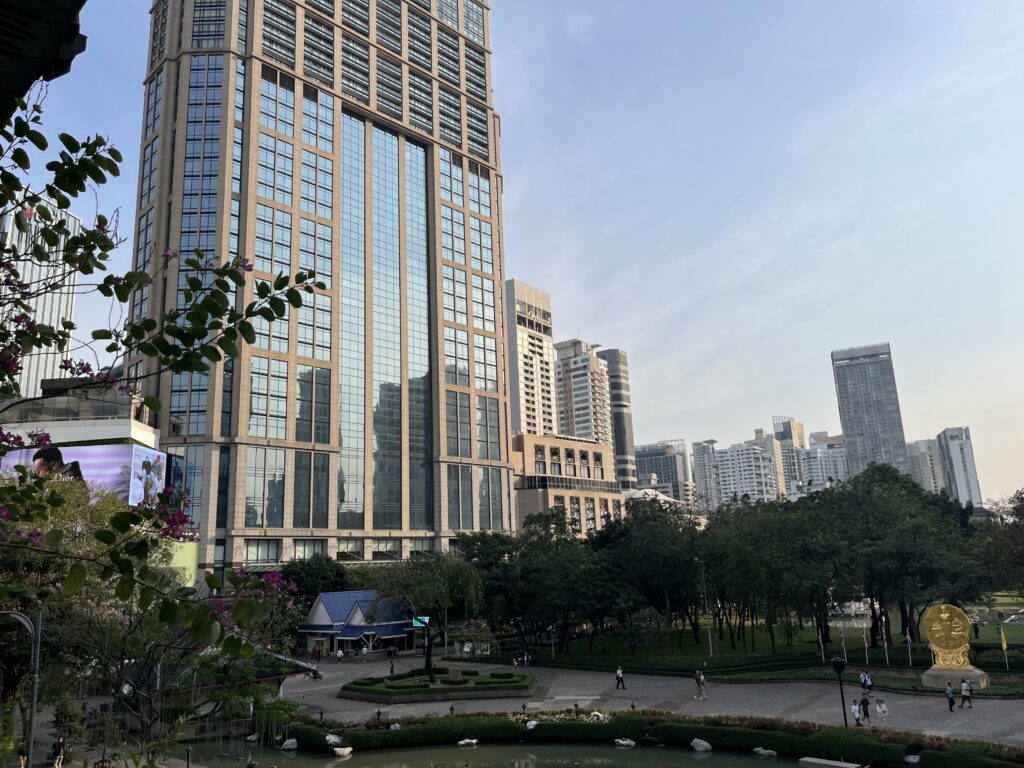
2. Evolving Infrastructure: Drastic Changes in Immigration and Transportation Amazingly
Smooth Immigration Processes First, I was surprised by how smooth the immigration inspection has become. In the past, it was normal to wait in a long queue for nearly an hour. However, thanks to the introduction of online pre-registration, entry is now incredibly fast. The tedious task of borrowing a ballpoint pen on the plane to fill out an immigration card is a thing of the past.
The Convenience of "Grab" (Ride-Hailing Services) Transportation has also changed dramatically. "Grab," a ride-hailing service, has become completely established. When you call via the app, a private car driven by an individual arrives, and it is far more comfortable than a standard taxi. It feels almost as if a friend is picking you up.
In the past, I had to hail a taxi and negotiate in Thai with the driver. With Grab, you input the destination in advance, saving the trouble of explanation, and the fee is fixed. According to a local friend, the number of traditional taxis has significantly decreased.
Cashless Payments in Restaurants Cashless transactions are accelerating rapidly throughout the city. "PromptPay," a QR code payment system promoted by the Thai government, is widely used. It is becoming unnecessary to carry cash anymore.
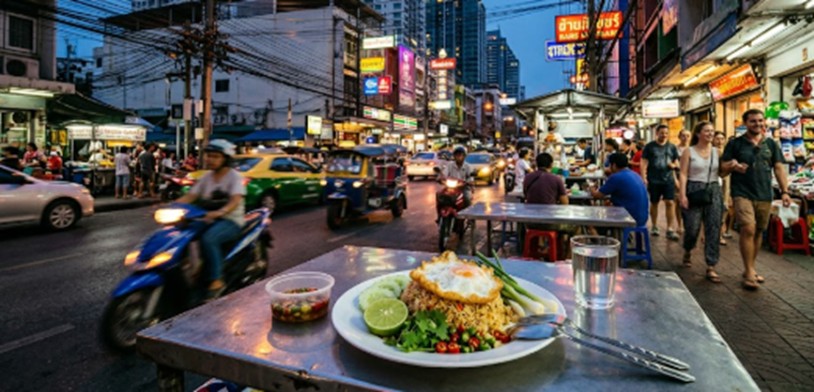
Changes in Food Culture: Soaring Prices of Japanese Cuisine and the Local Lifestyle
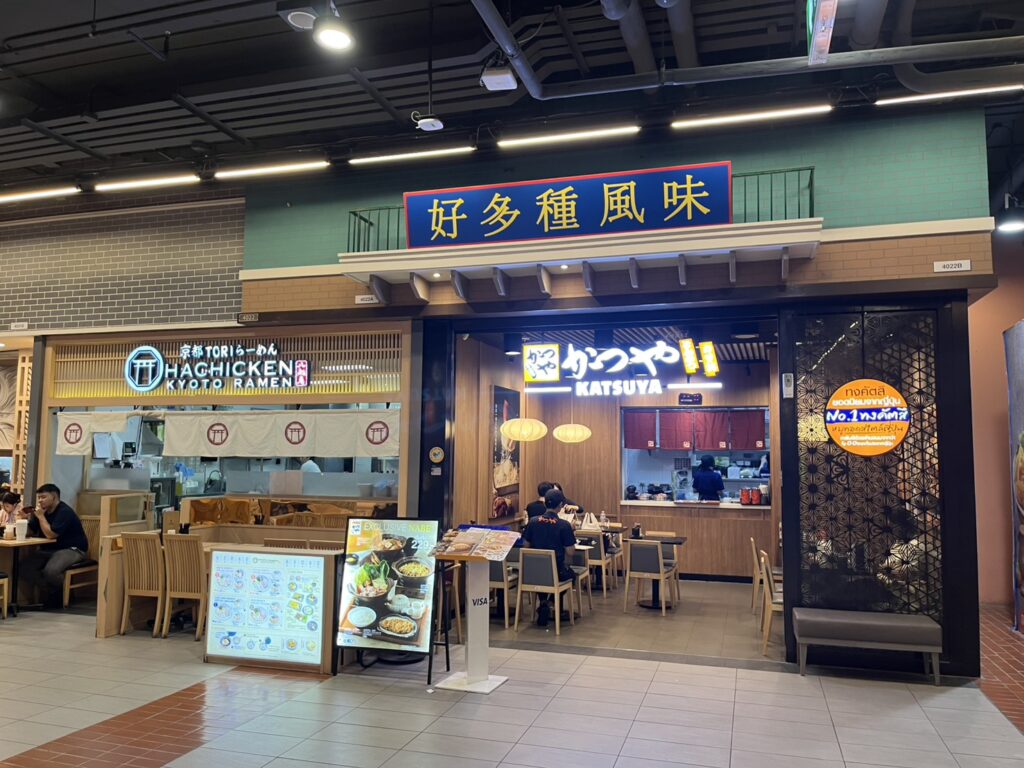
A Bowl of "Katsudon" Costs Three Times More Than Before The changes in food culture are also significant. When I lived here, a Japanese lunch could be had for around 100 Baht. Calculated at the exchange rate of the time (1 Baht = approx. 3 Yen), that was about 300 Yen.
On this trip, I ate a Katsudon at a local "Katsuya," and the price was 184 Baht. At the current exchange rate (1 Baht = approx. 5 Yen), that is about 920 Yen. This is more expensive than eating in Japan and has effectively tripled compared to the past.
In an era where "Yoshinoya" once withdrew because 300 Yen was considered too expensive, young Thai people today naturally enjoy meals costing nearly 1,000 Yen. This was a moment where I truly felt the 20 years of economic growth through my own stomach. (*Photo: A "Katsuya" restaurant in Bangkok)
The Frenzy of Japanese Culture: Japan Expo and the Chaos of MBK
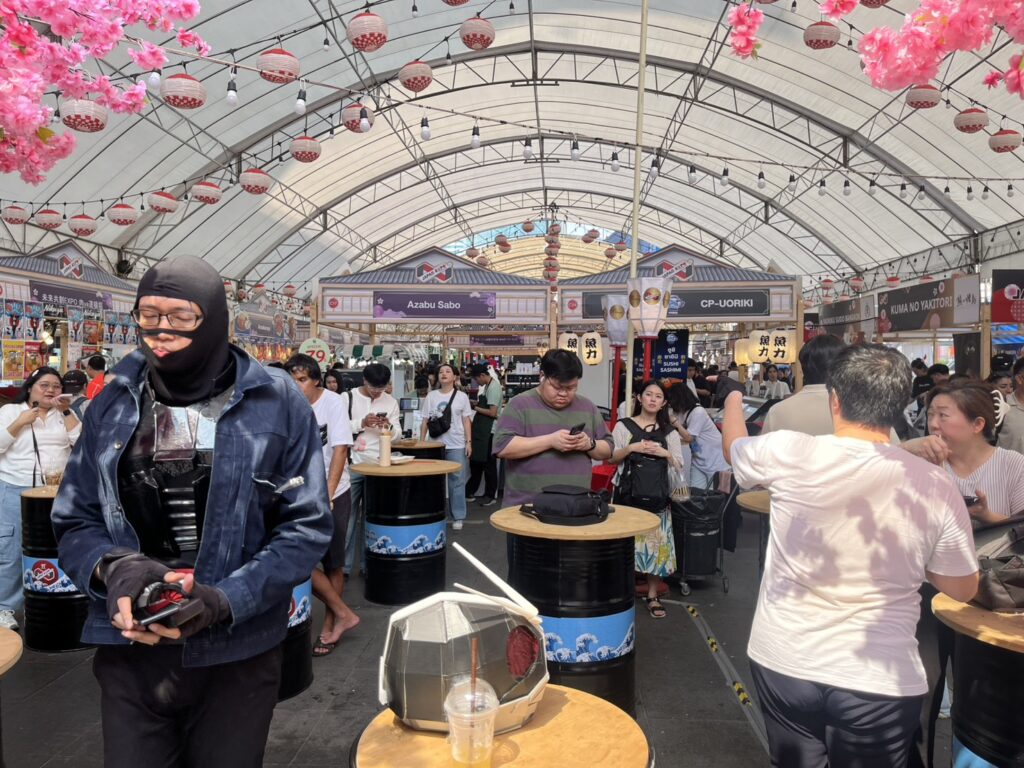
Intense Penetration of Japanese Culture I also visited "Japan Expo," an event introducing Japanese culture held in Bangkok. Thailand has always been a pro-Japanese nation, but I felt the energy has evolved even further. Many young Thai people were already in cosplay at the nearest station. At the venue, concerts by underground idols were being held with great enthusiasm.
Furthermore, "Animate" has expanded into the MBK Center (Mahboonkrong). The chaotic energy of MBK, with its crowds of shops, has merged with the latest Japanese anime culture. It was fascinating to see a vibe reminiscent of the mysterious energy of Akihabara from a previous era. (*Photo: The scene at Japan Expo)
(End of Part 1)
In the next post (Part 2): I will discuss the "unchanging traffic" and "unchanging warmth of the Thai people." I will also dive into why we can no longer survive on "Japanese Yen savings" alone, and the 21st-century survival strategy (Doctrine) seen through the heat of Bangkok. Please stay tuned.
■Author Profile
About the Author Kenji Kamioka
AFP (Certified by the Japan Association for Financial Planners), Licensed Real Estate Transaction Specialist
President and CEO of Julius Co., Ltd.An investor and media owner with over 10 years of business management experience in Asian countries: Thailand, and Vietnam. While actively managing real estate and financial assets through his own company, he promotes a lifestyle that leverages the structure of capitalism. He has authored numerous books.
▶ [Click here for author profile details.]
▶ [See the list of works here]