Hack the National OS: What a 12th-Century Maritime Rebellion and AI Teach Modern Investors about Infinite Wealth
Subtitle: How to escape the r>g corporate matrix, dismantle the bureaucratic pyramid, and deploy a global digital trade empire from day one.

1. Introduction: The Free Winds of Port City Kobe and Rewriting the National OS
Near Kobe-Sannomiya Station, in the heart of the port city overlooking the historic Owada-no-tomari, two figures can be seen. Chita, wearing a tight navy suit, is working in a remote office with an energy drink in hand. Beside him stands his classmate Rachel, perfectly dressed in a sleek gray tailored suit, elegantly holding the latest tablet.
"Kobe is truly a modern port city. But to think Taira no Kiyomori tried to move the capital here 850 years ago—it seems like a reckless gamble that ultimately failed."
Chita mutters while tilting his can. Rachel gazes out at the sea with her ice-blue eyes and quietly shakes her head.
"Reckless? No, Chita. Kiyomori was a visionary entrepreneur born centuries too early. He didn't just move the capital. He sought to directly connect Japan's economy to global trade with Song Dynasty China. He was trying to rewrite the national OS."
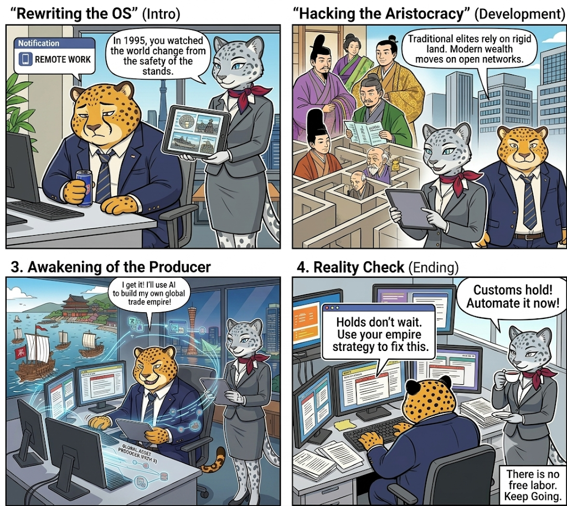
🎬 Go Deeper: Enjoy the four-panel manga with Rachel & Chita
2. Development: Historical Insights—Kiyomori’s Blueprint and Hacking Global Money
The old aristocracy in Kyoto clung to domestic land interests—a rigid, pyramid-shaped bureaucracy. They obsessed over the circulation of "silk" as commodity money, entirely focused on protecting their vested interests. In contrast to the inward-looking eyes of the nobles who feared a decline in the market value of silk, Kiyomori looked completely outward.
Kiyomori renovated Owada-no-tomari, directly channeling vast wealth and massive amounts of copper coins from Song China into Japan. While Japan exported timber and swords, circulating the imported Song coins nationwide laid the first foundation for a true monetary economy in Japan. For ordinary people, currency was highly convenient. The silk used by aristocrats meant nothing to them.
However, this deepened the friction between the Taira clan and the aristocratic incumbents.
The Taira clan, triggered by the influx of Song currency, eventually went to war and faced downfall. The subsequent Kamakura shogunate briefly issued a "ban on Song currency," but its circulation in the market could not be stopped, causing the price of silk to plummet. Ultimately, even the Kamakura shogunate had to officially recognize Song currency. It is the same as ancient Rome transitioning into an empire even after Caesar’s death.
Despised by the Senate—the defenders of vested interests—and vanishing into the waves of history, the figures of Caesar and Kiyomori deeply overlap.
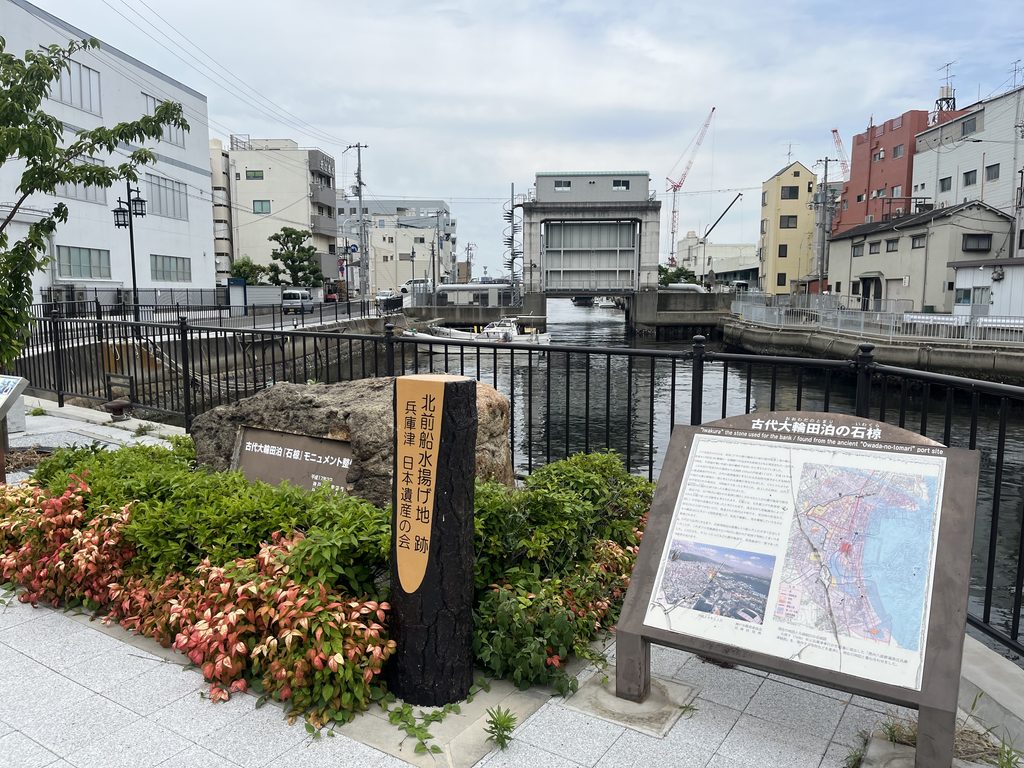
In any era, exceptional leaders are strong in economics. Oda Nobunaga, who led the Warring States period, expanded his economic power by taking control of logistical hubs like Sakai and Otsu, moving toward his vision of unification. Riding the current Subway Kaigan Line and walking from Chuo-Ichiba-mae Station leads to the slightly quiet ruins of Owada-no-tomari. The bustling central market remaining east of the station is a powerful legacy of the grand logistical hub that Kiyomori once created.
3. Core: Modern Capture Strategies and Position Shifting
History repeats itself. Modern traditional salaried workers are no different from the ancient Kyoto nobility, locking themselves inside a shrinking domestic market. Given the structural distortion of capitalism where "return on capital (r) > economic growth rate (g)"—meaning the return on assets consistently outpaces growth through labor—clinging to a position within a domestic organization means holding onto an overwhelmingly disadvantageous spot.
"Does that mean my current salary is nothing more than a local illusion? To survive the AI era, I need to directly link my business to the global market, just like Kiyomori did."
A wild spark of intelligence, liberated from corporate pressure, ignites in Chita's eyes. Rachel smiles, showing a dashboard on her tablet.
"Exactly. By leveraging generative AI and translation tools, you can deploy digital assets globally from day one. There is absolutely no need to maintain a heavy, bureaucratic pyramid organization. By establishing a flat ecosystem that connects AI with existing global platforms, you can draw 'infinite wealth' from the global economy."
4. Conclusion: Dropping Reality and No Free Labor in Life
"Brilliant. Kiyomori used physical ships and coins, but I will use AI and digital content to build my own global trade empire. I will shift my position from an employee to a global asset producer."
Awakening in an instant, Chita speaks of a grand future. However, Rachel gazes at a massive container ship docked at the Port of Kobe, lets out a gentle chuckle, and thrusts her tablet’s notification screen right in front of Chita.
"Bold words for a true global producer. Speaking of global logistics, an urgent notification just arrived from the branch of your international logistics department. A shipment from an overseas client is held up at customs, and it requires your immediate approval. Why don't you clear that paperwork right in front of you using your proud 'entrepreneurial mindset' first?"
"Oh no, customs paperwork! I need to type AI prompts right now to translate and generate the declaration documents. There is no free labor in life."
Chita holds his head in despair and begins furiously pounding his laptop keyboard while frantically drinking his energy drink. Beside him, Rachel elegantly sips her herbal tea, quietly watching over her partner as he panics like a child.
👉 Modern Kibyoshi Vol. 1: Hack Capitalism Now on sale!
▪Disclaimer
The information provided on this blog is for educational and informational purposes only and does not constitute professional financial or investment advice. We do not provide third-party asset management or individual management services. Please make investment decisions at your own risk.
© 2026 Julius.inc / Kibyoshi Project. All Rights Reserved.
"This character and setting are the intellectual property of Julius Inc., based on its own doctrine."
■Author Profile
About the Author Kenji Kamioka
AFP (Certified by the Japan Association for Financial Planners), Licensed Real Estate Transaction Specialist
President and CEO of Julius Co., Ltd.An investor and media owner with over 10 years of business management experience in Asian countries: Thailand, and Vietnam. While actively managing real estate and financial assets through his own company, he promotes a lifestyle that leverages the structure of capitalism. He has authored numerous books.
▶ [Click here for author profile details.]
▶ [See the list of works here]