Hack Capitalism: Dismantle the Old Rules and Mass-Produce Your Own Digital Assets
Subtitle: A Modern Investor’s Guide to Achieving Wealth with 70% Effort, Inspired by Historical Outlaws
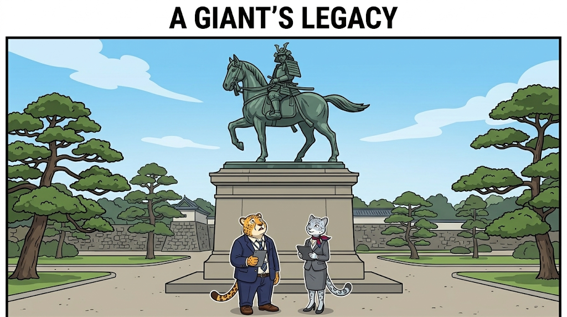
🌟A behind-the-scenes look at the creation of the modern-day *Kibyoshi* series!
1. In front of the majestic equestrian statue in the Kokyo Gaien National Garden
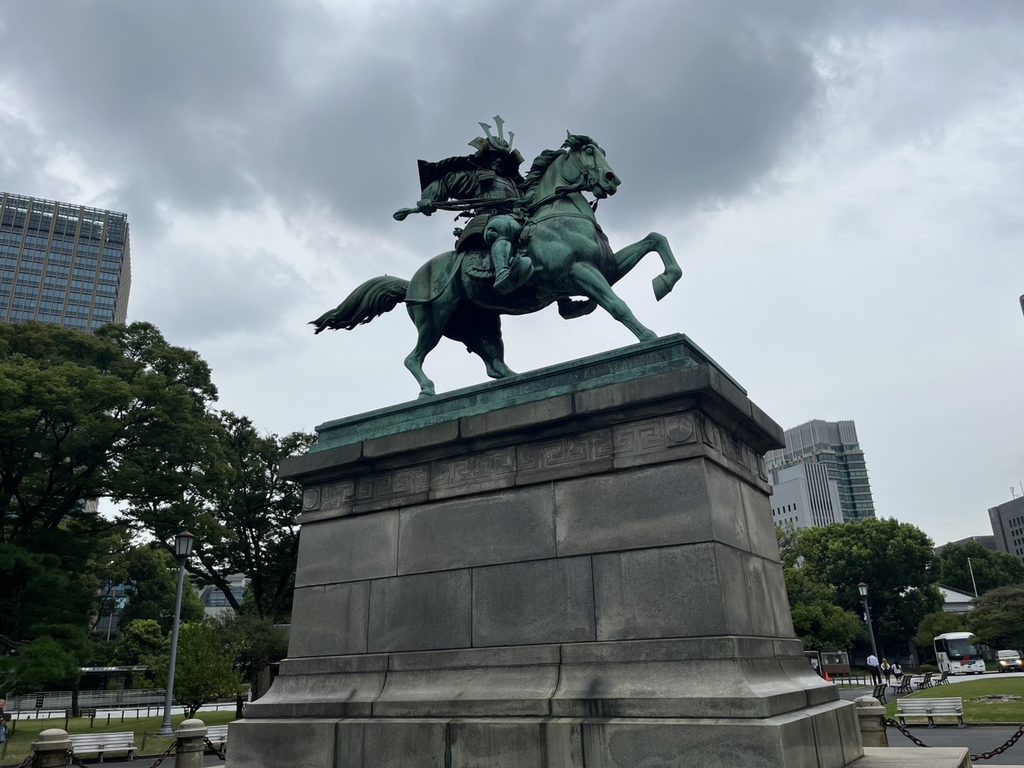
Walking through the vast grounds of the Kokyo Gaien National Garden, a massive equestrian statue of a figure restraining his horse and bowing in reverence catches your eye. Standing about 4 meters tall, or 8 meters including its pedestal, this magnificent statue is the "Statue of Kusunoki Masashige," considered one of Tokyo's three great bronze statues.
Looking up, Chi-ta mutters. "It feels somewhat strange to have a statue of a man called the 'Scoundrel of Kawachi' right in front of the Imperial Palace."
Rachel quickly corrects him. "The meaning of 'scoundrel' back then was completely different from a modern-day thug. He was the ultimate strategist who read the times and fought on his own terms." The two begin to explore the hidden truth behind why this statue was placed in such a symbolic location for the Emperor.
2. The truth about the "Scoundrel" and the symbol of "loyalty" demanded by the times
Many people mistakenly believe that Kusunoki Masashige "washed his hands of the yakuza business to dedicate his life to serving the Emperor," but this is a major misunderstanding. In those days, the term "scoundrel" (akuto) referred to newly emerging warriors who defied the control of manor lords and estate stewards, refusing to obey the established order. In other words, they were outlaws who rebelled against the old, existing system.
He was a strategist who excelled at guerrilla warfare, and during the Siege of Chihaya, he toyed with the massive shogunate army by dropping huge rocks and giant logs on them. His actions are reminiscent of Sanada Masayuki, who later stalled Tokugawa Hidetada's army during the Sengoku period.
After the fall of the Kamakura shogunate, Masashige became a close aide to the Emperor in the new Kenmu government, and even after Ashikaga Takauji rebelled, he remained on Emperor Go-Daigo's side, eventually dying in the Battle of Minatogawa. Because of these historical facts, he came to be praised as a loyal subject in later generations.
Entering the Meiji era, the view that the Southern Court held the legitimacy of the Nanboku-cho period grew stronger. Influenced by Meiji national policy, Kusunoki Masashige, who showed utmost loyalty to the Southern Court, became highly regarded as the "symbol of loyalty and patriotism." Modeled after his valiant figure when welcoming Emperor Go-Daigo upon his escape from Oki Islands, the statue was created by renowned sculptors like Takamura Koun and placed in this location in front of the Imperial Palace.

3. The outlaw lifestyle: Infiltrating from outside the existing system Kusunoki
Masashige's way of life offers important insights for us surviving in modern capitalist society.
He did not follow the existing manorial order (the old system), but instead faced a massive army in his own "winning arena" (his own turf) through guerrilla warfare. This is exactly the outlaw lifestyle of entrepreneurs and wealthy investors—infiltrating from outside the existing system (corporate organizations), or dismantling it to create entirely new rules.
Rather than riding the wave of index investing that everyone believes is standard, you wait for a market crash and exploit distortions to acquire high-quality, dividend-producing assets at low prices. You make new tools like AI your allies to mass-produce your own digital assets. Stepping away from the masses and sticking strictly to your own doctrine is a way of life that resonates with that of the "Scoundrel of Kawachi."
Masashige acted on his own will and fought without pandering to existing authorities. We too can break free from the existing system of a company, and while maintaining a comfortable 60 to 70 percent margin of leeway, successfully build our very own "infinite fountain of wealth."
4. There is no such thing as endless unpaid work
Looking up at the equestrian statue, Chi-ta's eyes sparkled. "I get it! I'm done being just a cog following the company's old rules. I'm going to use AI to become a 'scoundrel' who infiltrates from outside the existing system!"
Tilting her tumbler filled with black tea, Rachel coldly declares, "Before you do that, finish processing the logistics trouble claims coming from the overseas branches. If you do it manually, you'll be up all night. Hurry up and run the Python script." Chi-ta frantically opens his company tablet and begins wrestling with a mountain of errors. "There is no such thing as unpaid work in life. Keep Going..."
📘Modern Kibyoshi Series Now on sale!
▪Disclaimer
The information provided on this blog is for educational and informational purposes only and does not constitute professional financial or investment advice. We do not provide third-party asset management or individual management services. Please make investment decisions at your own risk.
© 2026 Julius.inc / Kibyoshi Project. All Rights Reserved.
"This character and setting are the intellectual property of Julius Inc., based on its own doctrine."
■Author Profile
About the Author Kenji Kamioka
AFP (Certified by the Japan Association for Financial Planners), Licensed Real Estate Transaction Specialist
President and CEO of Julius Co., Ltd.An investor and media owner with over 10 years of business management experience in Asian countries: Thailand, and Vietnam. While actively managing real estate and financial assets through his own company, he promotes a lifestyle that leverages the structure of capitalism. He has authored numerous books.
Please click here for a list of my publications 👉Amazon.com: KENJI KAMIOKA: books, biography, latest update
▶ [Click here for author profile details.]
▶ [See the list of works here]