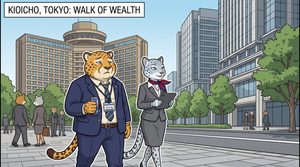
"Capitalism Hack" Learned at a Dong Khoi Street Currency Exchange: The World's Reality Determined by Deals and the Infinite Spring of Wealth
Subtitle: Stop Accepting Given Numbers: The Ultimate Guide to Transforming from a Corporate Employee to a Deal-Making Business Owner

🌟A behind-the-scenes look at the creation of the modern-day *Kibyoshi* series!
1. The Paris of the East and the Energetic Streets
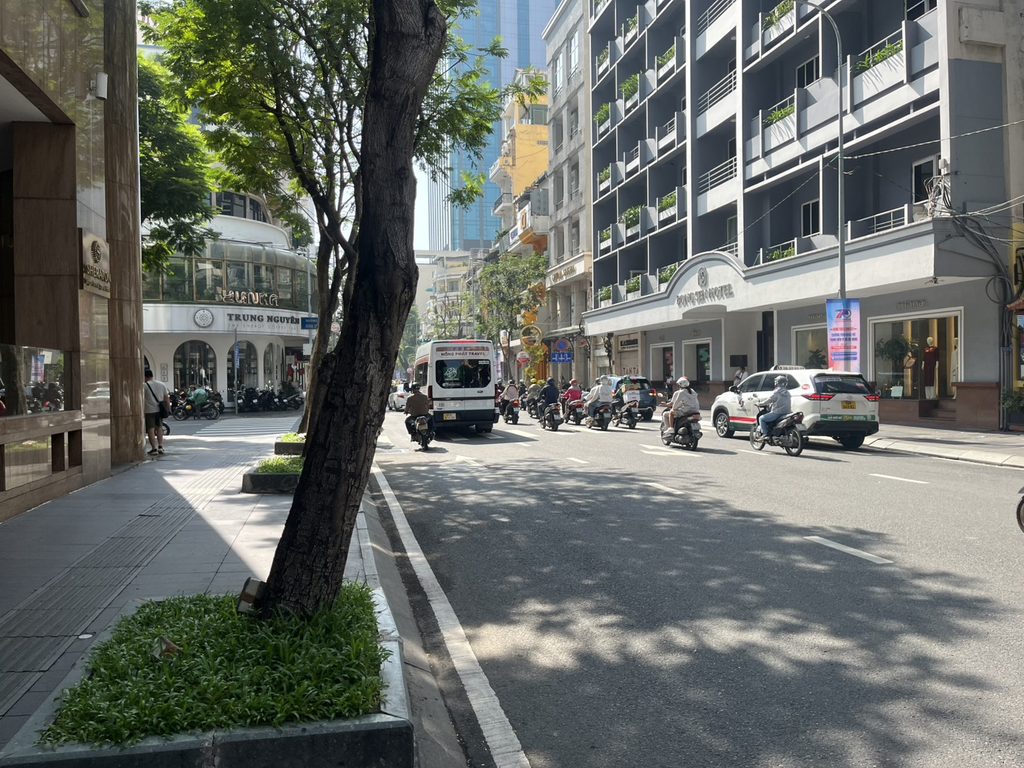
Dong Khoi Street is located in the heart of Ho Chi Minh City. This area, once known as the "Paris of the East," is lined with beautiful Western-style architecture, yet it is enveloped in the heat and hustle unique to Asia. As you walk down the street, motorbike taxi drivers call out, "Need a ride?" When they spot a Japanese person, they playfully shout the names of specific motorcycle brands—a local charm that remains unchanged from the past.
Looking at the roads, it feels like a stage for a sport that requires explosive reflexes. Motorbikes and cars weave in and out so freely that it feels as if traffic lights hardly exist. Even if you obey the pedestrian signal and start walking, motorbikes will calmly ignore the light and charge right at you. Here, you can only trust yourself, and you must never leave your safety entirely up to systems like traffic lights. Although the number of motorbikes has decreased compared to the past, cars have increased proportionately, and the roads have grown wider.
Though rough around the edges, you can feel an intense momentum. The sight of people relaxing on small chairs by the roadside is still alive and well, and their expressions convey a solid confidence in living in a continuously growing city. This is the true reality of a dynamic Asia.
2. The Overlooked Room for "Negotiation" at the Currency Exchange
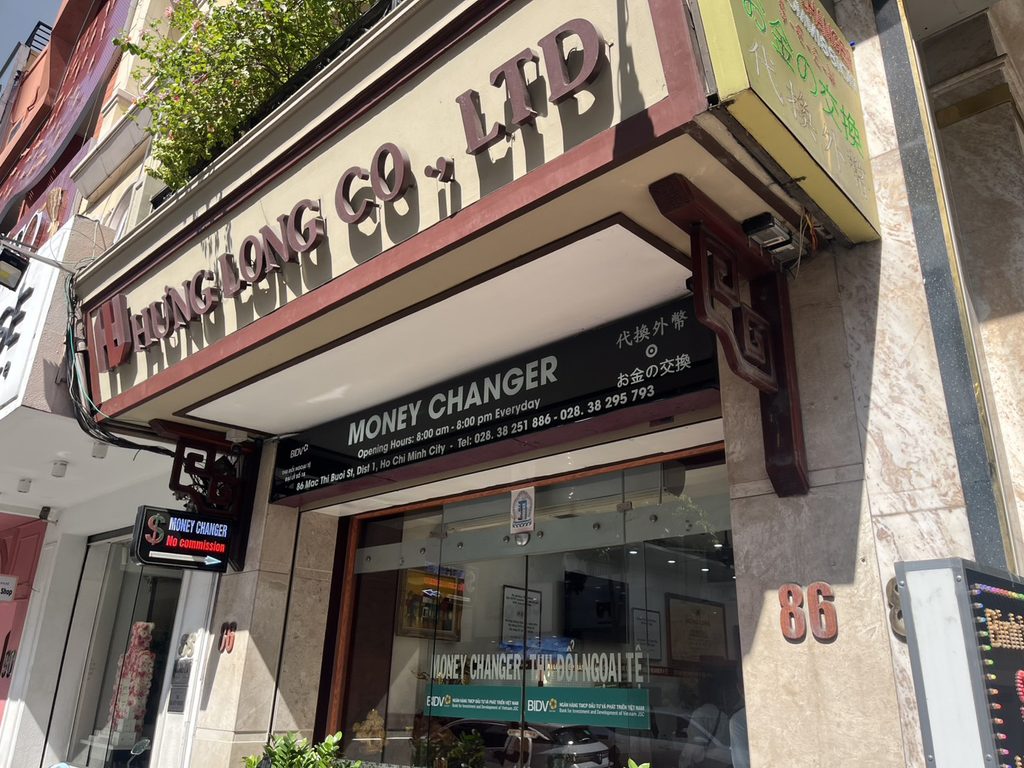
Chita and Rachel, having touched down in Ho Chi Minh City for a business trip, headed to a street-level currency exchange on Dong Khoi Street to secure some immediate local funds.
There is an unspoken rule when it comes to exchanging currency abroad. Generally, the exchange rate tends to improve in the following order: the departure airport in Japan, the local hotel, the local airport's currency exchange, and finally, the street-level currency exchange.
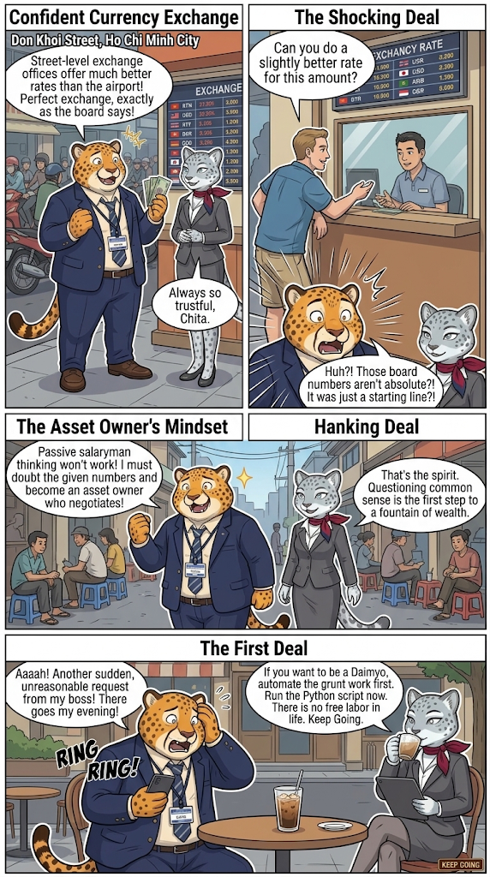
Drawing on his past experiences, Chita was overconfident, thinking, "If it's a currency exchange on the street, the rate should be good enough."
Looking at the rate displayed on the electronic board, he converted his Japanese Yen to Vietnamese Dong without a second thought, ready to head back completely satisfied with his wise choice.
However, right after that, a Caucasian tourist waiting in line behind Chita began negotiating the exchange rate with the teller. Witnessing the tourist boldly initiate a deal by asking, "Can you give me a better rate?", Chita acutely realized his own naivety. The posted numbers were not the absolute truth; they were merely the starting line for a negotiation.
🎬 Go Deeper: Enjoy the four-panel manga with Rachel & Chita
3. Question the Given Numbers: The Doctrine of a True Asset Owner
This incident at the currency exchange suggests an important doctrine for surviving in a capitalist society.
When living as a salaried employee, it is easy to unconsciously accept the rules and numbers of the world as things "handed down from above." We tend to assume that our job roles and monthly salaries are absolute standards decided within the organization.
Just as Chita accepted the exchange's posted rate at face value, many people "only see the reality they wish to see."
However, the thinking (OS) of an asset owner or business owner is entirely different. For them, prices and conditions in investing and business exist in a world of "deals" that can change depending on negotiations. Just as the yield on a real estate flyer is not exactly the ultimate truth, purchase prices and cash flows are things you determine through your own discretion and negotiation.
To build "real assets"—assets that put cash directly into your pocket—and to remain wealthy for a long time, you must question the common sense handed to you. In an era of inflation, instead of just depositing money in a bank and praying, you must move your funds by your own will and flexibly change your tools depending on the situation. Rather than blindly following the existing system, adopting the stance of an outlaw (a maverick) who creates their own rules at times is the absolute condition for keeping the infinite spring of wealth from drying up.
4. The Path to Becoming a Business Owner Also Starts with Daily Automation
"I see. You can learn the essence of capitalism even from a small street-level currency exchange. Don't swallow the displayed rate; initiate a deal. I'm going to ditch this salaried worker mindset of being satisfied with given numbers and become an asset owner who can negotiate in every situation in life!"
Having opened his eyes to a new investment doctrine amidst the heat of Asia, Chita's eyes sparkled.
But immediately afterward, Chita's smartphone rang. It was an urgent message from his boss in Japan.
"Sorry, but I need you to manually enter all this expense data into the system by tomorrow morning. And don't mess up the rate calculations!"
"What!? I have to do all this massive manual entry right now in Vietnam!? Forget about dealing, I won't even be able to go eat pho today!" Chita said, holding his head in despair.
Rachel, elegantly sipping her Vietnamese coffee amidst the hustle and bustle, coldly fired back.
"If you want to become a business owner, first build a system to break free from that kind of low-level menial work. Use AI and programs to strike an automation deal with yourself. There is no such thing as working for free in life. Keep Going."
▪Disclaimer
The information provided on this blog is for educational and informational purposes only and does not constitute professional financial or investment advice. We do not provide third-party asset management or individual management services. Please make investment decisions at your own risk.
© 2026 Julius.inc / Kibyoshi Project. All Rights Reserved.
"This character and setting are the intellectual property of Julius Inc., based on its own doctrine."
■Author Profile
About the Author Kenji Kamioka
AFP (Certified by the Japan Association for Financial Planners), Licensed Real Estate Transaction Specialist
President and CEO of Julius Co., Ltd.An investor and media owner with over 10 years of business management experience in Asian countries: Thailand, and Vietnam. While actively managing real estate and financial assets through his own company, he promotes a lifestyle that leverages the structure of capitalism. He has authored numerous books.
▶ [Click here for author profile details.]
▶ [See the list of works here]